




 English
 Hotel La Compañía: The Revival of a Jesuit Convent in Casco Antiguo, Panama
A former Jesuit site, a long interrupted history, and the restoration that brought one of Casco Antiguo’s most layered buildings back into use.
Set on the site of a Jesuit convent dating to 1688, Hotel La Compañía Casco Antiguo brings together surviving ruins, colonial masonry, and a restoration process that returned one of Panama’s most historically dense addresses to public view.
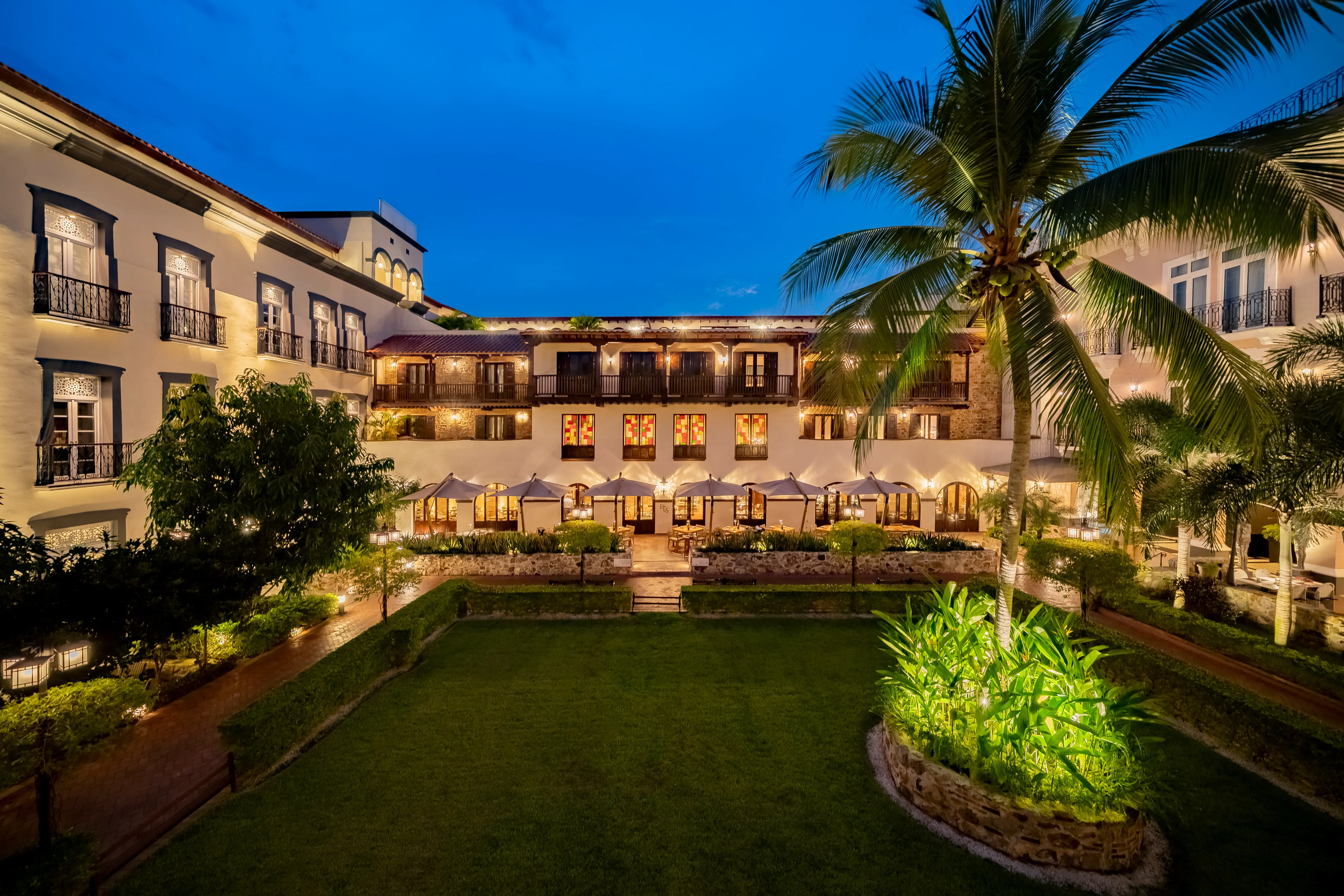
In Casco Antiguo, history rarely presents itself as a complete narrative. It survives in fragments: a wall, an arch, a courtyard that still explains the shape of a block. Hotel La Compañía stands on one of those sites. Its origins go back to 1688, when the Jesuits established their convent here after the destruction of Panamá Viejo and the founding of the new city.
The site sits within a broader sequence that begins earlier, with the founding of Panamá Viejo in 1521, its destruction in 1671, and the relocation of the city to what is now Casco Antiguo in 1673. By the late seventeenth century, construction had resumed across the new settlement, including religious and institutional buildings that would define its structure. Within that context, the Jesuits established La Compañía de Jesús in 1688, marking the origin of what is now understood as the Spanish Wing.
From that point, the site became part of the colony’s intellectual and religious life. Between 1739 and 1744, the Real y Pontificia Universidad de San Javier was established here, marking the beginning of what is now referred to as the French Wing (1739). The complex functioned as an academic and ecclesiastical center until 1767, when the expulsion of the Jesuits under the Spanish Crown brought that period to an abrupt end.
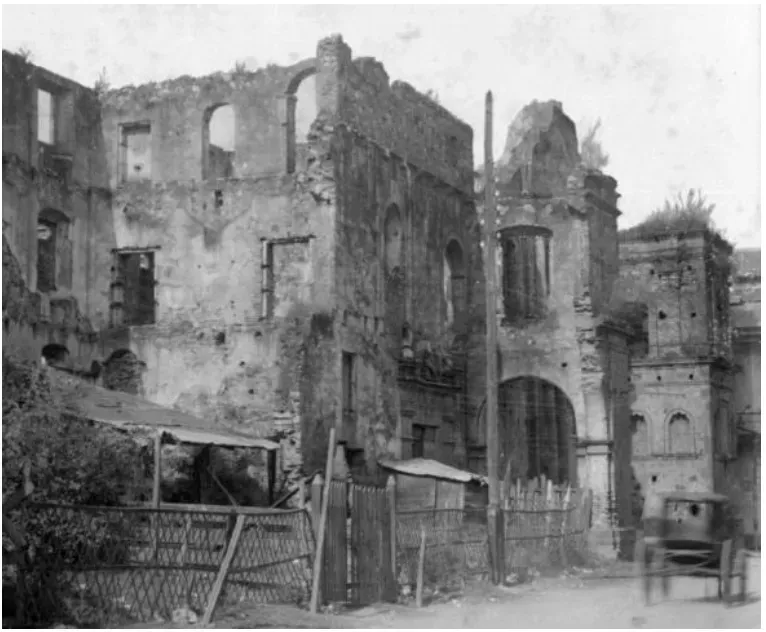
What followed was less continuous. Fires in 1737 and 1756 had already damaged parts of Casco Antiguo, and the earthquake of 1798 caused significant structural collapse within the complex, particularly in what is now the French Wing. By the nineteenth century, the original religious function had disappeared, and the site entered a period of adaptation.
In 1820, the buildings were repurposed as Hotel Washington, later becoming the International Club. These uses reflected the changing character of the neighborhood as Panama moved through the nineteenth century and into the early phases of international transit and commerce.
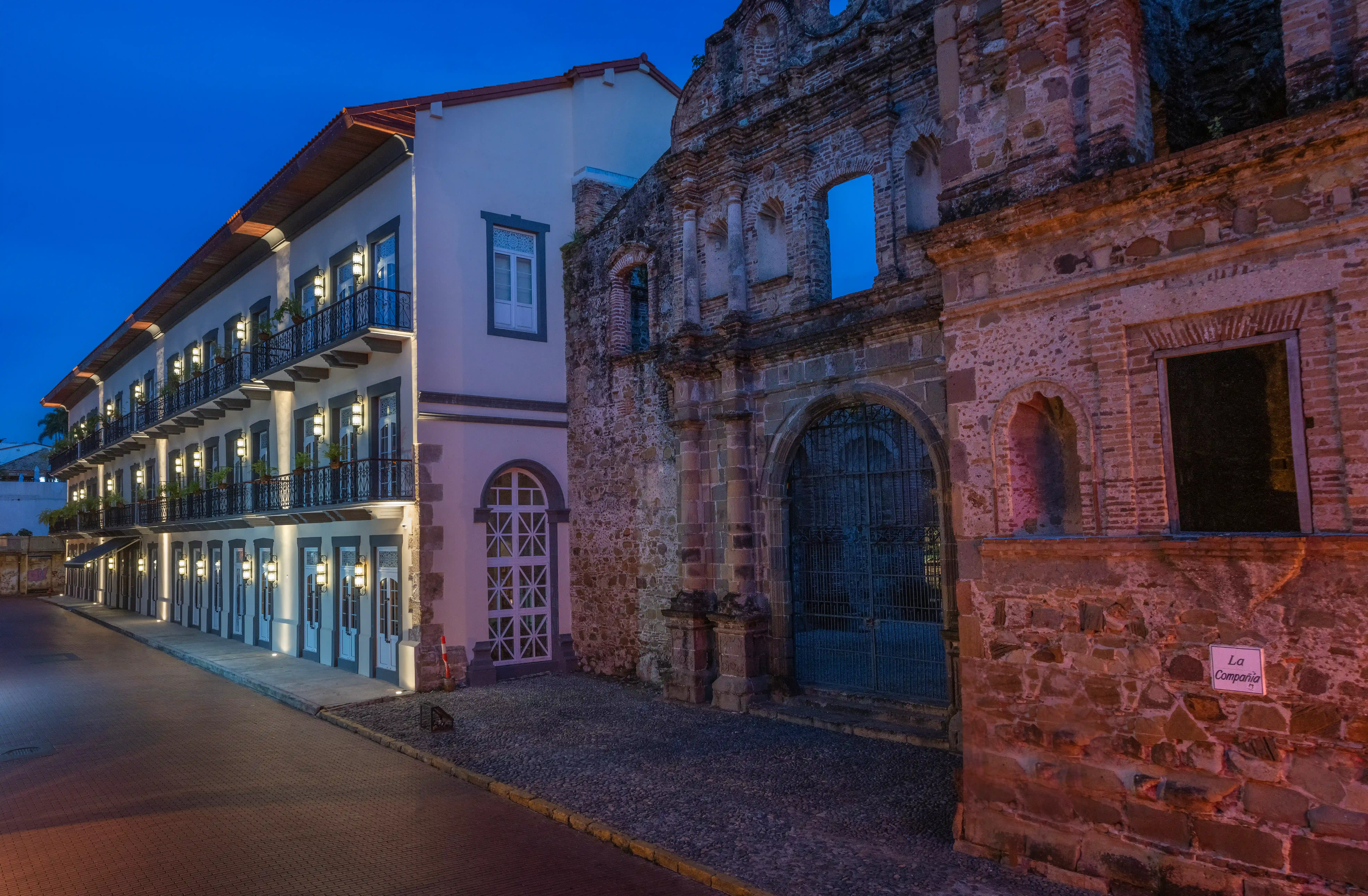
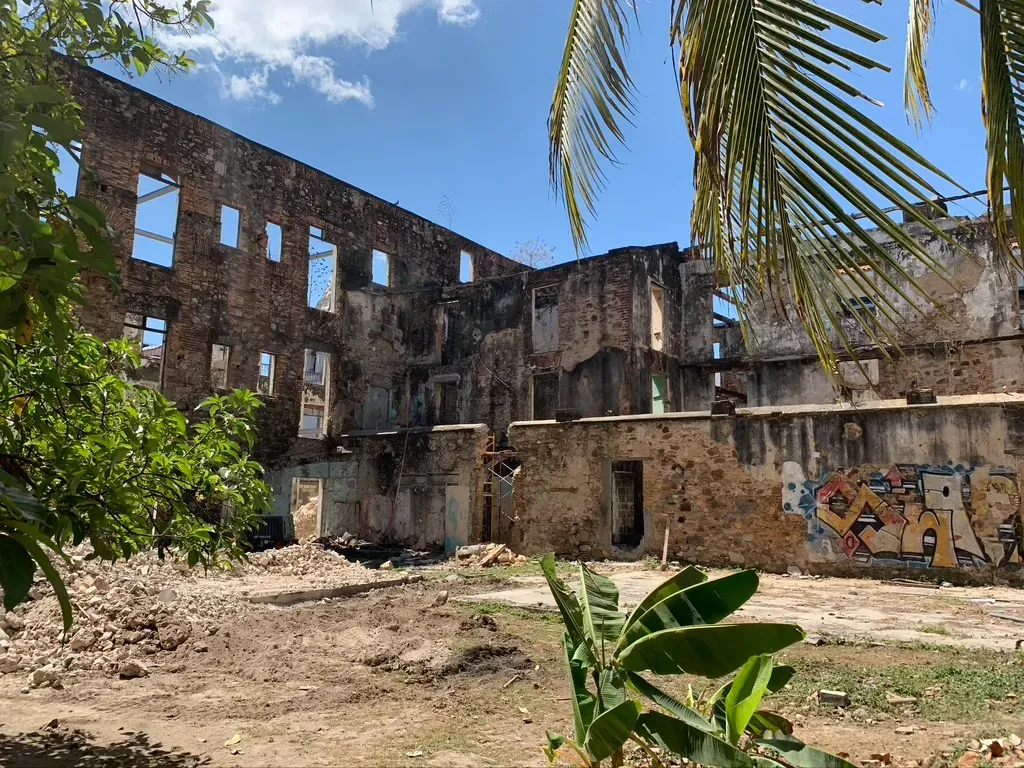
“What stands here today is the result of centuries of interruption, reuse, and restoration on one of Casco Antiguo’s most historically layered sites.”
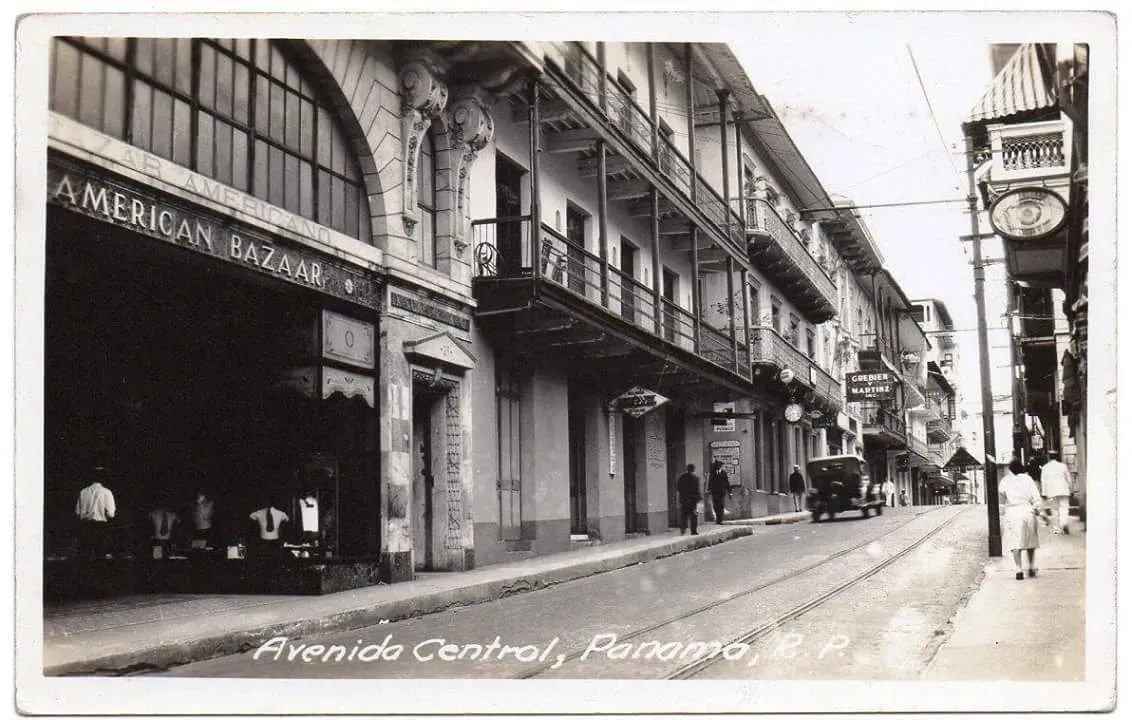
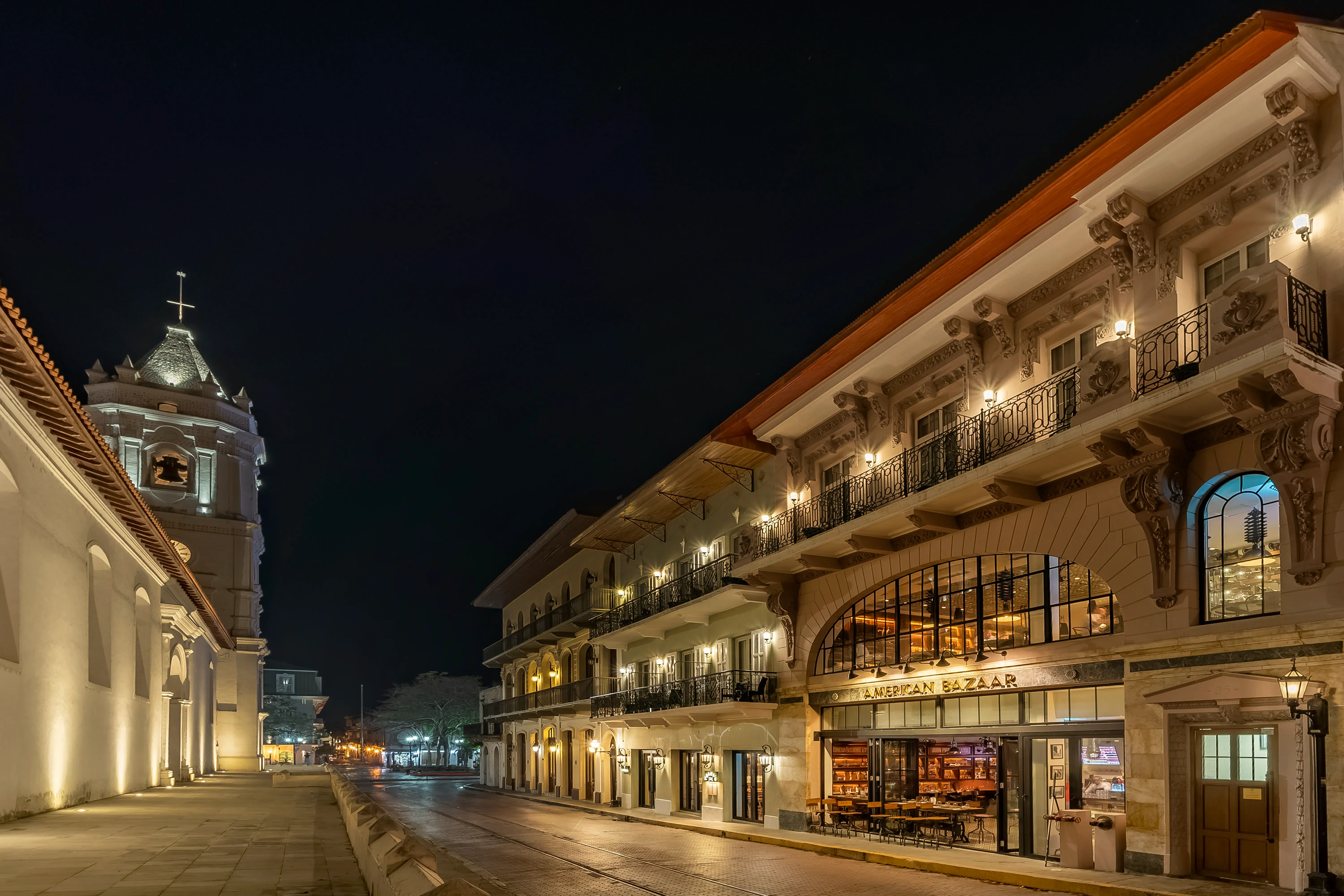
A more defined shift came in 1904 with the construction of what is now the American Wing. That same year, the American Bazaar opened on site, becoming one of the first department stores in Panama City. Around this period, the broader urban context was also changing, shaped by the development of the Panama Canal and increased foreign presence. Throughout the twentieth century, the site continued to evolve. In 1916, the Red Cross established operations here under Lady Mallet, adding another institutional layer to the property’s history. By the mid-century, parts of the structure had fallen into disuse, while others remained active in fragmented ways.
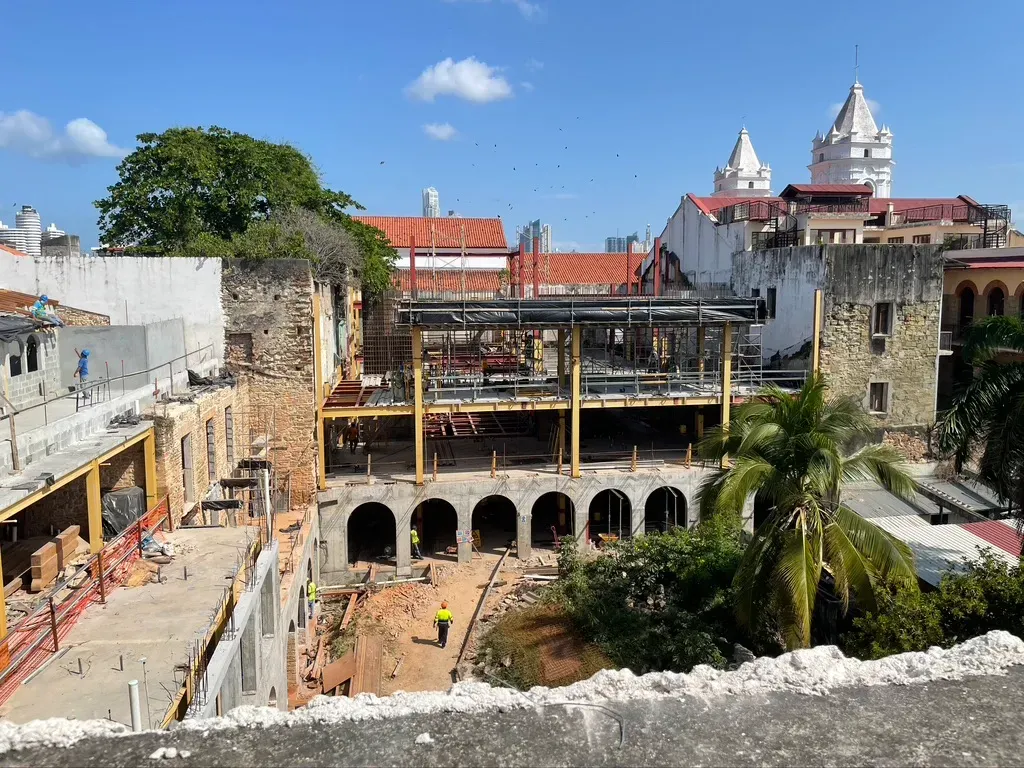
The current phase began in 2014, when the ruins of La Compañía de Jesús were acquired with the intention of restoration. Archaeological work followed in 2015, uncovering artifacts and structural elements, including a well dating back to 1688. By 2018, full restoration efforts were underway, focusing on stabilizing what remained while rebuilding with close attention to historical records. The project moved gradually through excavation, preservation, and reconstruction, leading to its opening in 2022.
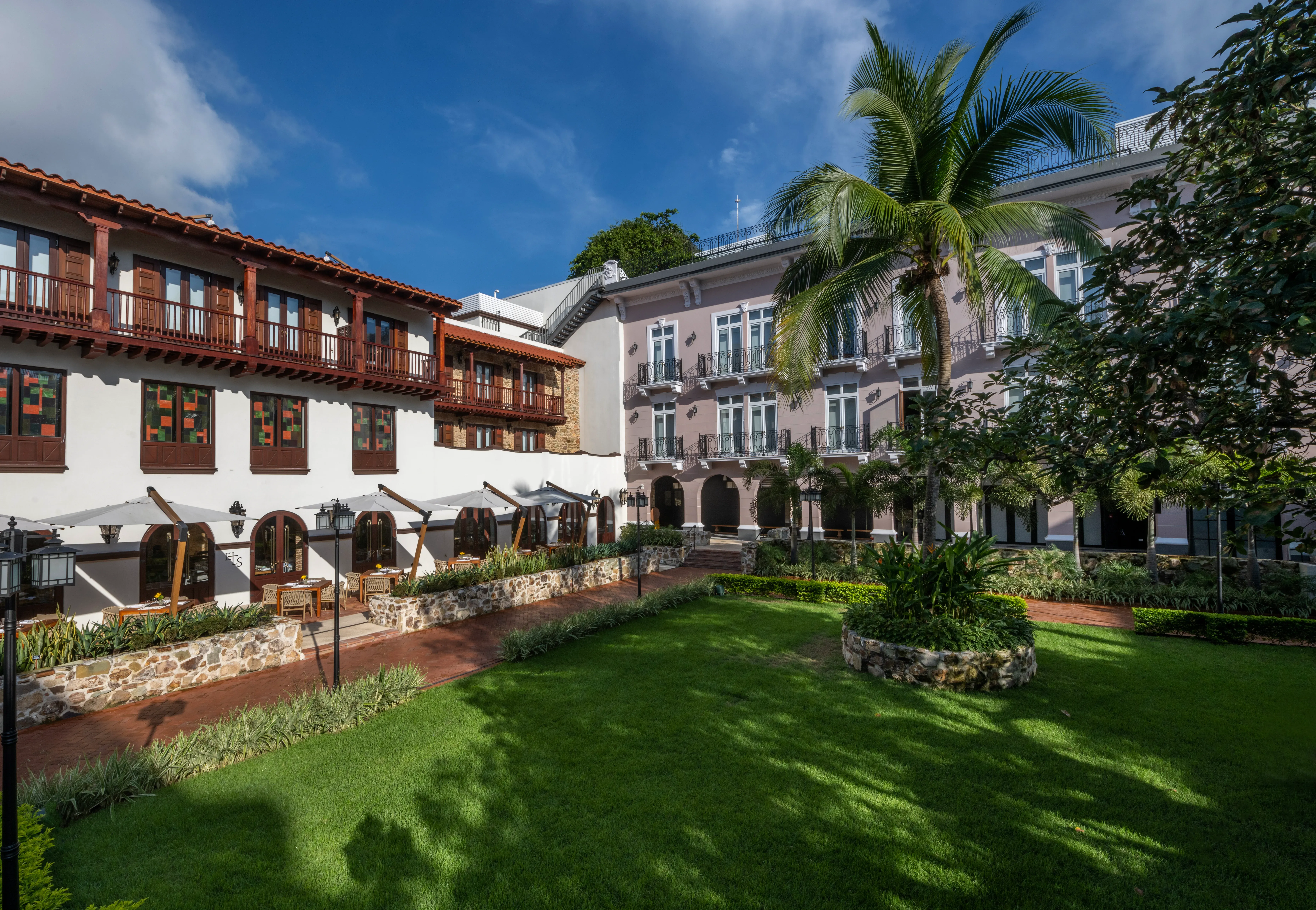
Today, the three wings: Spanish (1688), French (1739), and American (1904), offer a clear way to read that layered history without reducing it to a single period. Each corresponds to a distinct moment in the site’s evolution, but they remain physically and contextually connected. The ruins of La Compañía de Jesús are still present within that framework. Courtyards, exposed masonry, and preserved walls are not treated as separate elements but integrated into the building itself. What stands today is not tied to a single moment in time, but shaped by the accumulation of many. Seen in this context, Hotel La Compañía represents one of the most significant restoration efforts undertaken in Panama. The intervention keeps original structures in place, allows the building to show where it has changed, and avoids overcorrecting what was already there.